
This Suzhou city walk follows Xiangmen approach → Pingjiang Road south → Canal-side lanes → Baita East Road → Dongbei Street. It is a neighborhood outing with time to notice streets, stop for food and change the plan, rather than a full-city sightseeing checklist. Allow 3–4 hours with one seated break. Mostly narrow canal-side streets, stone paving and bridge steps; wet surfaces and crowds can slow progress.
Some social itineraries combine gardens, Pingjiang, Shantang and Jinji Lake. This page keeps the canal walk compact and identifies those other places as separate transport decisions.
We would keep one proper seated break and decide on optional interiors only after checking energy and current entry conditions. The route was developed from an October 12, 2026 review of local walking material and the reference sources below; it is an editorial plan, not a claim that we personally walked every segment.
Where does the walk start and finish?
| Decision | Plan |
|---|---|
| Start | Xiangmen station / 相门站, then the southern Pingjiang Road entrance |
| Finish | Dongbei Street / 东北街; arrange a legal street pickup or map the return to metro |
| Time allowance | 3–4 hours with one seated break |
| Walking load | Mostly narrow canal-side streets, stone paving and bridge steps; wet surfaces and crowds can slow progress. |
| Main route | Xiangmen approach → Pingjiang Road south → Canal-side lanes → Baita East Road → Dongbei Street |
Save the Chinese names before setting out. Use a current pedestrian map for each connection: a route diagram shows the stop order, not every crossing, accessible entrance or temporary diversion. Exact distance varies with the entrances, lane choices and optional visits you select.
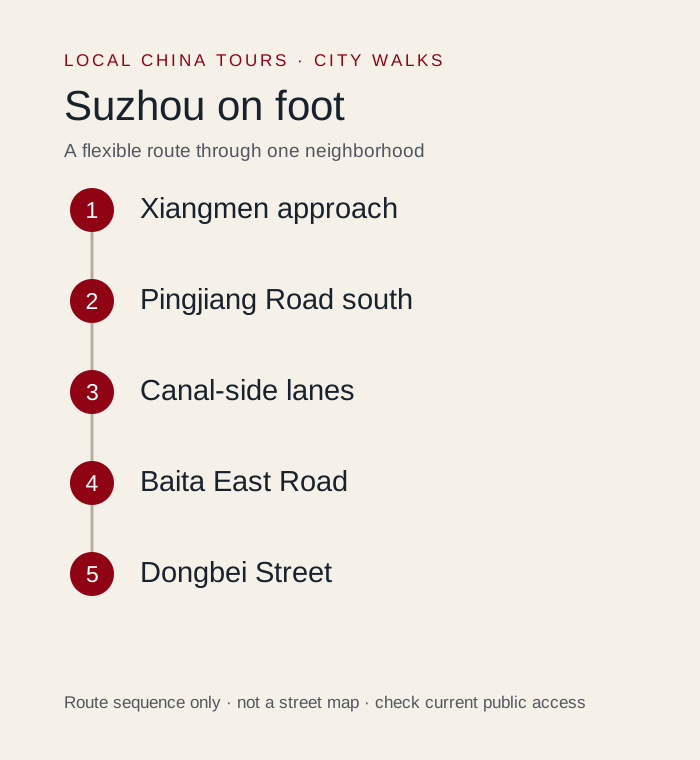 Original Local China Tours planning diagram. Route sequence and allowances are editorial guidance; use a current map for street navigation.
How should you follow the route?
1. Reach Pingjiang Road from Xiangmen / 相门
Start near the southern end rather than navigating to a random shop in the middle of the lane. Ganjiang East Road is the orientation point; use safe crossings before entering the historic street. This south-to-north direction makes the route easy to follow even when you choose several side-lane pauses. Do not confuse the metro station with a similarly named bus stop.
Next connection: Continue north along Pingjiang Road / 平江路, keeping the parallel canal as your main orientation line.
2. Walk the canal-side street slowly / 平江河
The interest is the close relationship between water, small bridges, houses and street frontage. Choose a few wider points for photos rather than stopping on every bridge. Shops and visitors share narrow space with residents; keep doorways and waterside edges clear. We would rather see one section carefully than rush north while constantly checking a list of snack shops.
Next connection: Stay on public lanes and continue north, making only short side excursions that return to the main canal-side route.
3. Choose one side-lane or cultural pause
A short lane, an accessible courtyard attraction or a booked performance can deepen the walk. It should replace some browsing time rather than add another full itinerary. Garden entrances and boat piers have separate arrangements; a street visit does not include admission to them. If you pick a cultural interior, check the current entrance and return to the main route before heading north.
Next connection: Rejoin Pingjiang Road and continue toward Baita East Road / 白塔东路.
4. Finish near the northern old-town cluster
At the northern end, Dongbei Street connects the route toward the well-known museum-and-garden area. Seeing their exterior approaches is enough for the basic walk. A visit to Suzhou Museum or a major garden needs its own booking and time allowance; do not make successful entry a condition of enjoying the street. Choose a meal or a practical departure point before the group becomes tired.
Next connection: Leave by a public street pickup or map a return to the metro. Take transport to Shantang if you choose a separate evening walk.
What is the shorter version?
Walk the southern and middle Pingjiang Road sections, sit down for tea, then return toward Xiangmen. Skip the northern museum-and-garden cluster.
Choose this version at the start if you have luggage, a tight departure time or limited walking tolerance. A shorter route with a meal and a good street section is still a complete outing. If mobility access matters, confirm individual paths and entrances; this guide does not certify a step-free route.
Where should you stop for food and a rest?
Choose one Suzhou noodle meal or seated tea stop. Pingtan is a local storytelling and musical-performance tradition; if you want a performance, check the program, language, duration and charge before sitting down. A cafe beside a canal is not proof that a boat ride or show is included.
Plan the break before the longest or most exposed section. Take drinking water, comfortable shoes and the weather protection you need. Before ordering, confirm the current menu and any minimum spend; the basic walk does not require buying a tour, booking a terrace or entering a particular cafe.
What should you leave for another outing?
Shantang Street and Jinji Lake are separate districts. Do not join them to Pingjiang as an uninterrupted short walk or add several major gardens without bookings.
Optional ticketed interiors, boats and performances need their own current rules and time allowances. Public street access does not establish access to the building beside it. If heavy rain, heat, local works or crowd controls interrupt a segment, use the open public alternative, shorten the walk or take a legal transfer.
How can you walk respectfully?
Stay on public streets and signed paths. Keep doors, market aisles, stairs and narrow bridges clear, ask before photographing people closely, and do not enter residential courtyards or rooftops for a view. A popular photograph is not evidence that a space is open to visitors. Keep the final pickup on a road a vehicle can legally reach.
Where does this fit in a longer trip?
- Best Day Trips from Suzhou for Water Towns and Taihu adds a separate planning option; choose it according to your remaining time.
- Best Day Trips from Shanghai adds a separate planning option; choose it according to your remaining time.
- How to Use China’s High-Speed Trains Without Stress adds a separate planning option; choose it according to your remaining time.
Use the Suzhou destination guide to place this walk in your wider stay. For help adjusting the route to your interests or mobility needs, use plan your trip and describe your preferred pace.
Sources and route review
Local walking material reviewed on October 12, 2026 informed the route choices and practical questions. Social descriptions can include advertising, outdated details and overambitious itineraries; they do not establish current prices, opening hours, access or accessibility. The stop order and suggested allowances are our editorial decisions.
- Suzhou water authority: Pingjiang’s canal and street layout supplies geographic, cultural or access context. Historical notices are not a guarantee of current operation.
- Suzhou development authority: Pingjiang Road endpoints supplies geographic, cultural or access context. Historical notices are not a guarantee of current operation.
Check current venue notices and on-site signs for optional interiors, crowd management and weather closures. The base walk stays on currently open public streets and paths.


