
ChinaSummer 2026: Why China Travel Took Off This Summer
ChinaSummer captures the 2026 wave of foreign visitors traveling in China and sharing the experience on TikTok and other social platforms. It turns the broader #ChinaTravel boom into a seasonal story: neon city nights, high-speed trains, street food, local neighborhoods, cultural experiences, and scenic escapes during June, July, and August.
The phrase appears in foreign-vlogger and media coverage, but it is not an official campaign and it does not have a reliably published standalone view count. Its meaning matters because it captures a real shift in how people discover China. Instead of beginning with a tour brochure, many travelers now begin with a saved TikTok and ask, “Can I actually do this trip?”
This guide explains the trend first, then translates the feed into a realistic route. If you only need weather and season comparisons, start with our best time to visit China guide.
#ChinaSummer in one minute
- It describes this summer’s foreign-visitor travel wave and the videos growing around it.
- It belongs to the much larger #ChinaTravel conversation.
- The strongest videos show everyday modern life, food, transport, culture, and dramatic city or nature scenes.
- Easier entry, more flights, practical travel tools, and social curiosity all helped make these trips easier to imagine.
- TikTok is inspiration, not an operating plan. Weather, tickets, apps, distances, and crowds still need verification.
What does ChinaSummer mean on TikTok?
On TikTok, #ChinaSummer means experiencing China during the summer travel season and sharing the parts that feel most surprising, cinematic, or different from expectations. The tag works as a seasonal hook rather than a fixed itinerary. One creator might film Chongqing’s vertical skyline after dark, while another shares a quiet tea house, a high-speed train, a night market, or a cool mountain escape.
The clearest public evidence appeared in August 2026. People’s Daily Online reported that “China Travel” and “China Cool” were trending on international social media and that some foreign vloggers were using the hashtag “China Summer.” That establishes the phrase as an emerging social tag, but it does not prove that it has already reached the size or durability of #ChinaTravel.
TikTok’s own Creative Center currently surfaces established related China travel hashtags such as #explorechina, #visitchina, #travelchina, #chinatrip, and #chinatravel. It did not return a stable public analytics page for #ChinaSummer during our August 19 review. For that reason, this article does not publish a made-up post count, view total, or growth rate.
The most accurate definition is therefore simple: #ChinaSummer is a new seasonal branch of the TikTok-driven China travel trend. It describes the trip people want to take after their feed makes contemporary China feel newly visible.
Why did China travel boom this summer?
China’s 2026 travel boom has several visible drivers: easier entry for many passport holders, recovering flight capacity, more practical digital tools, and first-person social videos that replace old mental images with everyday footage. Public data shows these factors moving together, but it cannot isolate how much demand came from TikTok alone.
The travel growth is measurable. In the first half of 2026, visa-free entries by foreign nationals exceeded 17.8 million, up 30.6% year on year and equal to 77.7% of foreign arrivals, according to official data published by the State Council of China. Foreign nationals made more than 45.9 million inbound and outbound trips during the same period, up 20.6%.
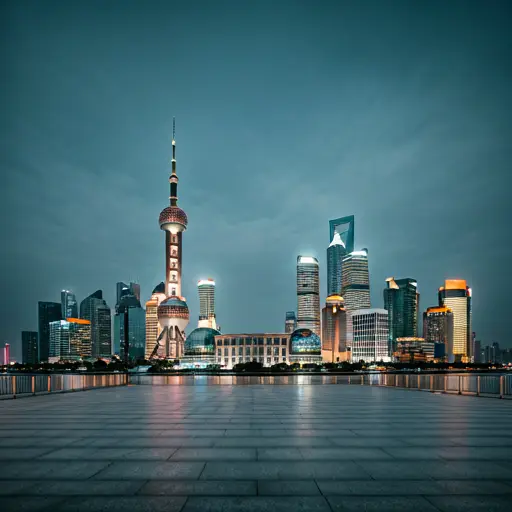
Social media shapes what those travelers do after arrival. CGTN reported that viral posts under hashtags such as #ChinaTravel across TikTok, Instagram, and YouTube are encouraging younger visitors to choose self-guided, lifestyle-focused trips. Their content moves beyond landmark checklists into city walks, local drinks, bathhouses, street food, Hanfu, tea, cooking, and the night skyline of Chongqing.
That combination creates a powerful loop:
- A short video shows a side of China that a viewer did not expect.
- The viewer saves several clips and begins comparing routes.
- Easier entry makes the trip feel possible rather than abstract.
- The traveler visits, films a personal reaction, and adds new footage to the feed.
- The next viewer discovers China through that reaction instead of a conventional advertisement.
This is why #ChinaSummer is more than a weather phrase. It is the summer edition of a larger discovery loop built around “I did not know China looked or felt like this.”
What does the #ChinaSummer feed actually show?
The #ChinaSummer idea is less about one destination than a set of recurring video formats. Public reporting on #ChinaTravel and indexed TikTok trend pages point to the following content patterns. These are qualitative themes, not a quantified sample of every #ChinaSummer post.
| TikTok content format | What viewers see | Why it performs |
|---|---|---|
| China after dark | Chongqing’s layered roads, Shanghai’s skyline, lit riverfronts, and busy late-night streets | The visuals are dramatic and challenge the idea that a China trip is only temples and daytime landmarks |
| Transport and technology | High-speed trains, large stations, metro systems, app-based payments, and delivery services | Everyday infrastructure becomes an expectation-versus-reality reveal |
| Food discoveries | Street snacks, hot pot, breakfast stalls, bubble tea, markets, and regional dishes | Food gives creators an immediate reaction and viewers a saveable place or dish |
| Living culture | Hanfu photos, tea ceremonies, cooking workshops, parks, dance, and neighborhood routines | Culture appears participatory rather than displayed behind glass |
| Local city life | Alleys, creative districts, bathhouses, convenience stores, and casual city walks | Ordinary moments make the trip feel accessible and personal |
| Summer escape | Yunnan landscapes, mountain scenery, green karst country, forests, and waterside routes | Cooler-looking scenery balances the heat and intensity of major cities |
The best clips compress a complex trip into one satisfying moment. A seamless train ride, a surprising skyline reveal, or a first bite of a regional dish can make travel look effortless. That emotional clarity is useful for inspiration, but it leaves out the setup around the shot.
Is #ChinaSummer the same as #ChinaTravel, China Cool, or Chinamaxxing?
No. The terms overlap, but each owns a different idea.
| Term | Main meaning | Best use |
|---|---|---|
| #ChinaTravel | The broad social-media umbrella for traveling in China | General trip discovery, itineraries, and destination content |
| #ChinaSummer | A seasonal TikTok tag for visiting China in summer | Summer trip inspiration, routes, weather-aware experiences, and creator stories |
| China Cool | A loose label for China’s modern appeal and, in some summer coverage, cooler destination choices | Culture, design, technology, lifestyle, or “coolcation” stories |
| Chinamaxxing | Internet slang for leaning into Chinese aesthetics, habits, products, media, or travel | Broader cultural fascination that can exist before or after a trip |
The cleanest relationship is: #ChinaTravel is the umbrella, #ChinaSummer is the seasonal campaign-shaped tag, and Chinamaxxing is the wider cultural mindset. Read our Chinamaxxing meaning guide for the slang, adjacent keywords, and traveler context.
What does TikTok get right about summer travel in China?
TikTok gets the contrast right. A single trip can combine imperial architecture, mobile-first daily life, giant rail stations, mountain scenery, regional food, and late-night urban energy. China is also large enough that “summer in China” is not one weather condition or one travel style.
The platform also correctly highlights evening life. In hot cities, the most enjoyable hours may come after sunset, when riverfronts, food streets, parks, and neighborhood restaurants become more comfortable. A route that protects the evening can feel more natural than one that ends all sightseeing at 5 p.m.
Finally, creator videos reveal that modern daily life is part of the attraction. For many first-time visitors, the metro, payments, delivery services, and ordinary commercial streets are not background details. They are part of the travel experience viewers came to see.
What does the #ChinaSummer feed leave out?
The feed usually leaves out heat, rain, booking friction, travel distance, and the time needed to set up a phone and payments. Those details do not make a strong five-second hook, but they decide whether a real itinerary works.
Watch for five gaps between a saved clip and a bookable trip:
- Weather: Chongqing, Shanghai, Beijing, Yunnan, and Zhangjiajie do not share one summer climate. Check the city and date, not “China weather.”
- Distance: Two locations that appear beside each other in a compilation may require a flight or most of a day by rail.
- Reservations: Major attractions and popular train sectors can sell out, especially during local school holidays.
- Digital setup: Data access, translation, maps, and mobile payments work best when configured before the first packed sightseeing day.
- Recovery time: Heat, humidity, altitude, jet lag, and station transfers can turn a visually perfect route into an exhausting one.
The Ministry of Culture and Tourism advises summer travelers to monitor weather, flood, and geological-risk alerts, avoid undeveloped areas, prepare for heat and rain, and reduce outdoor activity around midday (official summer travel notice, June 2026). A live warning should always outrank a saved video.
How do you turn a #ChinaSummer save into a real trip?
Start by identifying what you actually saved. Was it a skyline, a food experience, a train, a historic site, or a cool landscape? Choose one primary travel desire, then build a three-part route around it: one gateway city, one everyday-culture stop, and one scenic change of pace.
| If your saved videos feature… | Start with… | Add for contrast |
|---|---|---|
| Neon skylines, architecture, and modern city life | Shanghai or Chongqing | Yunnan, Guilin, or Zhangjiajie |
| History, hutongs, and the Great Wall | Beijing | Chengdu or a scenic southwest stop |
| Food, tea houses, and pandas | Chengdu | Jiuzhaigou or Yunnan |
| High-speed rail and multiple city reveals | Beijing, Shanghai, or Xi’an | Keep the route on one logical rail corridor |
| Mountains, green scenery, and cooler-looking air | Yunnan or a well-connected mountain region | One gateway city, not three more remote regions |
Do not collect every viral place into one trip. The better strategy is to reproduce the feeling of the feed through contrast, not to reproduce every location in the feed.
Which destinations fit a first #ChinaSummer trip?
The best destinations depend on weather, access, and the reason you saved the clip. These five provide clear roles in a first summer itinerary.
Shanghai for modern-city energy
Choose Shanghai for neighborhood walks, museums, food, retail, transport, and skyline evenings. Humidity and rain can shorten outdoor time, so schedule walking early, move indoors around midday, and return to the riverfront after sunset. Our five-day Shanghai itinerary can be shortened into a two- or three-day gateway stay.
Beijing for the iconic first trip
Choose Beijing if the Great Wall, Forbidden City, temples, and hutongs matter most. These sights are large and exposed, so the first available entry time is valuable in summer. Use our Beijing first-timer guide to choose a few anchors instead of forcing every famous site into consecutive days.
Chengdu for food and everyday culture
Choose Chengdu for tea houses, Sichuan food, pandas, parks, and a slower urban rhythm. It can still be hot and humid, but the day adapts well to early starts, long meals, shaded breaks, and evening exploration. A three-day Chengdu itinerary is enough before a scenic extension.
Yunnan for a change in elevation and pace
Yunnan offers summer routes beyond the major lowland cities, but “Yunnan” is not one climate. Elevation, rain, and transfer time vary between Kunming, Dali, Lijiang, and higher areas. Read our Yunnan altitude and route guide before adding several stops.
Guilin or Zhangjiajie for the cinematic landscape
Choose Guilin for karst country and a route that can combine city access with Yangshuo. Choose Zhangjiajie for dramatic mountain scenery and longer days inside a large scenic area. Both need a weather buffer because summer rain and visibility can change the experience.
What is a realistic 10-day #ChinaSummer route?
A realistic first route is Shanghai, Chengdu, and Yunnan. It matches the TikTok story without becoming a sequence of airports and stations: modern gateway, food-led city, then a scenic change in pace.
Days 1 to 3: Shanghai
- Day 1: Arrive, activate data and payments, then take an easy evening walk.
- Day 2: Explore one neighborhood early, choose a museum or shopping area at midday, and see the Bund after sunset.
- Day 3: Build the day around food, architecture, or one short excursion if the forecast is stable.
Set up mobile access before a packed sightseeing day. Our China eSIM and payment guide covers data, payment apps, and backup methods for foreign cards.
Days 4 to 6: Chengdu
- Day 4: Travel to Chengdu and keep the arrival evening simple.
- Day 5: Visit the panda base early, rest at midday, then focus on food and tea-house culture.
- Day 6: Choose one cultural site or slow neighborhood day instead of adding a distant excursion by default.
Days 7 to 10: Yunnan
- Day 7: Travel to Kunming and adjust to the change in elevation and climate.
- Day 8: Explore Kunming or continue to one additional base.
- Day 9: Keep one full scenic or cultural day without a long transfer.
- Day 10: Protect the departure with a buffer rather than connecting a remote transfer directly to an international flight.
If you have seven days, choose two bases. If you have two weeks, add Beijing or Xi’an, but keep at least two nights after each major transfer.
What should travelers verify before booking?
Verify five things with current sources: passport-specific entry rules, live weather and warnings, official attraction reservation procedures, transport schedules, and the digital services you plan to use. Do this after choosing a draft route and again shortly before departure.
Use high-speed rail for well-connected city pairs and flights for long geographic jumps. Summer demand makes last-minute improvisation less comfortable. Keep the passport used for booking accessible, arrive early at major stations, and avoid building a mountain transfer, domestic flight, and international departure into one fragile chain. Our China high-speed train guide explains station timing, seat classes, and when rail is easier than flying.
Pack breathable, quick-drying clothes, comfortable walking shoes, sun protection, a compact rain layer, a refillable bottle, and one light layer for air-conditioned trains or higher elevations. Protect the passport and booking details from rain. The goal is not to prepare for every imaginable condition, but to stay functional when the weather changes.
Make #ChinaSummer more than a saved video
The real meaning of #ChinaSummer is not “China is perfect in summer.” It is that TikTok has made a summer trip to China feel newly imaginable for people who had not considered it before. The strongest version of the trend combines visual excitement with the confidence to travel independently.
Use the feed to find the experience you want. Then slow down, check the distance, build around the weather, and leave room for ordinary moments. A late dinner, an easy metro ride, or a shaded neighborhood walk may become more memorable than the viral shot that first made you book.
Research and verification notes
This article was researched and reviewed on September 12, 2026. TikTok’s public tag and video pages were not consistently accessible to search crawlers during the review, and its Creative Center did not return a stable #ChinaSummer analytics page. We therefore do not publish a view count or claim that the tag is already as established as #ChinaTravel.
The definition is based on public reporting that foreign creators were using the “China Summer” label, TikTok’s indexed related China travel hashtags, and broader reporting on #ChinaTravel across short-video platforms. Travel-volume and entry-policy figures come from official government data. Dynamic details such as visa eligibility, weather, attraction access, and transport schedules should be checked again for the traveler’s exact passport and dates.
Frequently asked questions
What does #ChinaSummer mean?
ChinaSummer is a 2026 social-media label for the wave of foreign visitors traveling in China during summer and sharing city life, food, trains, culture, technology, and scenic escapes. It sits inside the larger #ChinaTravel conversation.
Is #ChinaSummer a TikTok hashtag?
Foreign vloggers and 2026 media coverage use the China Summer label alongside established TikTok travel tags such as #ChinaTravel. A reliable public post or view total for #ChinaSummer was not available during our review, so its scale should not be overstated.
Why is China travel trending on TikTok?
Short videos show a side of China that surprises many first-time viewers: neon skylines, high-speed rail, mobile-first daily life, street food, local neighborhoods, and hands-on cultural experiences. Easier entry for many travelers and rising inbound visits have helped turn that online curiosity into real trips.
Is #ChinaSummer the same as #ChinaTravel?
No. #ChinaTravel is the broad umbrella for travel content about China. #ChinaSummer is a seasonal angle within that conversation, focused on trips, experiences, weather, and destinations during June, July, and August.
Is ChinaSummer an official tourism campaign?
No. ChinaSummer is a social-media label used by vloggers and media, not the name of a national visa policy or tourism program. Travelers should use official government and attraction sources for entry rules, weather warnings, and reservations.
What kinds of videos fit the #ChinaSummer trend?
Common formats include Chongqing and Shanghai at night, high-speed trains and metro systems, street-food discoveries, tea and Hanfu experiences, expectation-versus-reality reactions, and cooler summer escapes in places such as Yunnan or mountain regions.
Is China good to visit in summer?
Yes, if the route accounts for heat, humidity, rain, crowds, and altitude. Use mornings and evenings for outdoor sights, keep midday flexible, and combine a major city with one cooler or higher-elevation destination.
Keep reading

Best Time to Visit China by Trip Style
There is no single best month for China. The strongest answer depends on whether you care more about classic city weather, mountain scenery, or lighter crowds.

What Is Chinamaxxing? TikTok, Chinese Culture and Travel
Chinamaxxing is a TikTok trend about learning and trying Chinese culture and everyday habits. Explore what it means, why it spread, and how to go beyond the meme.

How to Use China's High-Speed Trains Without Stress
The rail system is one of the best reasons to travel around China, but visitors need a clearer idea of timing, station scale, and document checks.