
Lijiang local specialties are worth choosing around the Naxi culture and old-town experiences that brought you here. Dongba paper and thoughtfully attributed contemporary craft offer more specific keepsakes than another anonymous “Yunnan gift” box. We would begin with a small paper object, then decide whether a regional food product adds anything that we actually want to carry onward.
Our short list: A small Dongba paper object is our first choice for a Lijiang-specific keepsake. A clearly attributed contemporary craft suits someone who wants a useful object. Coffee and flower pastries are regional alternatives; choose them by flavor and producer rather than assuming an old-town storefront guarantees local production.
Which Lijiang specialties suit your trip?
| Specialty | Chinese name |
|---|---|
| Dongba paper goods | 东巴纸 |
| Locally attributed craft design | 纳西文创 / 丽江文创 |
| Yunnan coffee | 云南咖啡 |
| Flower pastries and labelled tea | 鲜花饼 / 云南茶 |
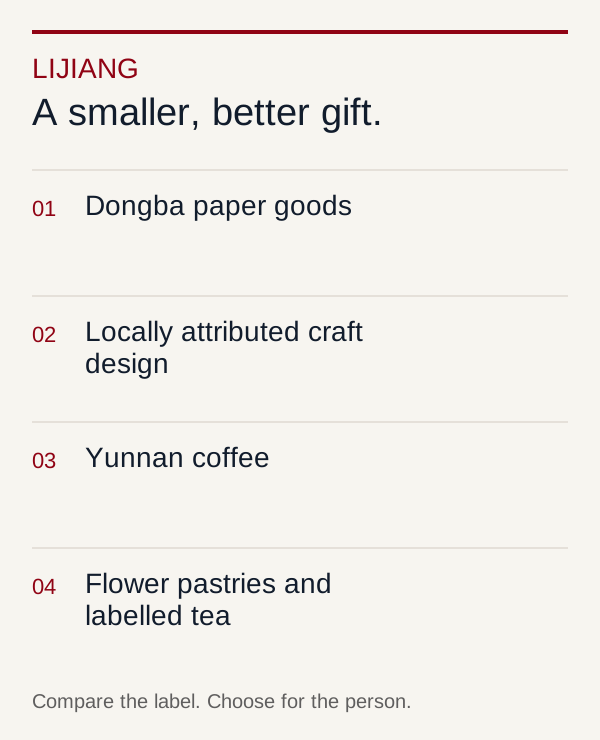 Original Local China Tours selection guide. Compare product labels and choose for the recipient; this is not a product photograph.
The illustration summarizes the categories; the cover photograph provides destination context.
What is worth a closer look?
Dongba paper goods / 东巴纸
Dongba paper connects with a living Naxi papermaking tradition. A small notebook, loose sheet or clearly attributed printed work can be more practical than a large decorative object. Ask whether the paper is handmade, who made it and what the printed or painted symbols mean. A textured souvenir sheet is not automatically an old document or a ritual object.
Before buying: Keep it flat in a rigid folder and away from leaking toiletries. Do not buy something marketed as an antique manuscript when a clearly described contemporary piece would serve the gift’s purpose.
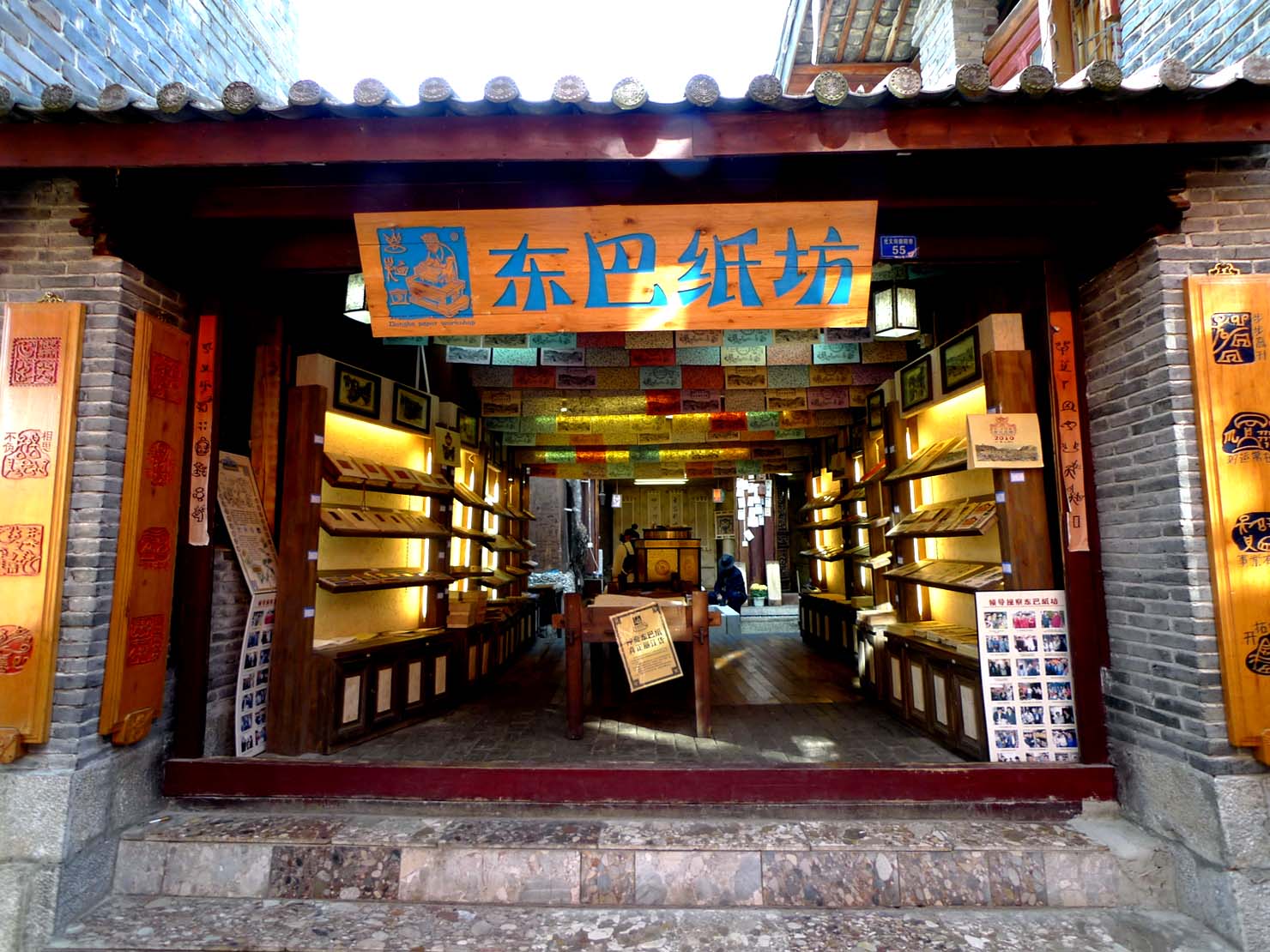 Historical Dongba paper-shop reference, October 2009. Gisling, CC BY 3.0 via Wikimedia Commons; current premises and stock are not verified by this photograph.
Locally attributed craft design / 纳西文创 / 丽江文创
An illustration, small ceramic object or contemporary design can make a personal souvenir when its maker explains the connection to Lijiang. Look beyond phrases such as “ethnic style.” Printed motifs, carved objects and hand-painted pieces involve different work, and should be described accordingly. Choose the item you can inspect rather than a bundle sold with an elaborate generic story.
Before buying: For fragile goods, ask for a rigid box. Keep the artist or workshop information, and avoid claiming a cultural symbol has a particular meaning unless the maker can explain it.
Yunnan coffee / 云南咖啡
Coffee can be a useful food gift if the recipient has a brewing method and enjoys exploring origins. Ask where the beans were grown and roasted: a Lijiang storefront does not make all beans local to the city. If a drink tasted floral or sweet, ask whether that came from the coffee, added flavoring, milk or syrup before choosing a bag.
Before buying: Check roast date, grind and ingredients. A small unflavored roasted coffee pack and a sweetened instant gift set are different products, even when displayed side by side.
Flower pastries and labelled tea / 鲜花饼 / 云南茶
These are regional alternatives when a paper or craft gift is not right for the recipient. Buy them for flavor, not for a claim that they can only be found in Lijiang. Compare a small sample and inspect the actual package. Tea in particular calls for a clear style and preparation explanation, rather than an expensive age or ancient-tree story.
Before buying: Retain dates and storage instructions. Choose a quantity suited to the rest of your route, with a separate check for the ingredients and your arrival-country requirements.
What is better enjoyed during the visit?
Keep freshly made Naxi-style baba and local cooked meals in the tasting itinerary. Food described online as something to “bring back” may simply mean taking a portion to a nearby hotel. The same applies to dairy treats and meat snacks: a long-distance or international journey needs a different decision. We would enjoy the food here and let a paper or design object carry the memory home.
How can you connect a paper gift with the making process?
Lijiang’s local account of Dongba papermaking describes bark preparation, pulping and forming sheets. Further local reporting discusses contemporary paper experiences. Search 东巴纸坊 or 东巴造纸体验 and ask which stages are demonstrated at the current venue. A finished notebook, a printed sheet and a workshop-made piece offer different experiences. Choose a contemporary object with an explained maker and use rather than an alleged old manuscript whose history you cannot establish.
How should you plan the shopping stop?
Look for an identifiable workshop where the maker can explain the process, rather than buying from the first decorative old-town window. Lijiang’s local reporting documents papermaking as real work involving bark preparation and paper formation; a shop’s antique-looking interior alone does not show that work happens there. If watching a demonstration is part of the appeal, confirm current arrangements directly rather than assuming every workshop offers one on demand.
Use our Lijiang city walk to combine a short browse with a neighborhood outing. The Yunnan regional guide helps place it within your wider route.
What should you avoid buying on impulse?
Avoid treating anonymous silver, supposed antique paper or unlabelled dried meat as a safe impulse purchase. Do not repeat allegations that whole categories of sellers are fraudulent; assess the product in front of you. Cultural motifs deserve a specific explanation rather than an invented blessing or authenticity story.
What should you check before taking gifts home?
Keep the original ingredients, producer, date and storage instructions. Ask for a receipt and buy a quantity you can protect through the next travel leg. Storage directions belong to the exact product; there is no single shelf-life rule for a city’s specialties.
For international travel, check your destination’s customs or agriculture authority before buying food, seeds, plants, animal products or alcohol. A sealed or vacuum-packed product is not automatic permission to enter. For example, US Customs and Border Protection requires declaration of food and agricultural items; other destinations have their own rules.
Continue planning
Compare this shortlist with the China local specialties collection. If you want help fitting a food or craft stop into your route, tell us about your trip. An inquiry starts a conversation about your needs.
Cultural references
Reviewed October 19, 2026. Product examples are selection leads; availability, prices and shop arrangements require a current check.

