Southwest China / Destination Guide
Chongqing

A sense of place
Chongqing is a vertical river metropolis of hillside streets, rail lines, hotpot, night views, and dramatic access to Wulong's karst landscapes.
Best for
Urban contrast
Chongqing feels unlike flatter Chinese cities because transport, streets, and buildings occupy different levels.
Pace
Downhill by design
Good routes start high, descend through old streets, and use transport to regain elevation.
Add-on
Wulong or Dazu
Use one full day for either landscape or cultural context, not both in a compressed stay.
Why Chongqing feels different
Chongqing's central experience is its geography. Rail lines, roads, towers, old neighborhoods, bridges, and river edges stack on multiple levels, so moving through the city becomes part of the sightseeing.
This gives Chongqing unusual visual energy, but it also changes practical planning. A short map distance can mean stairs, elevators, or a road on the wrong level.
Build days around terrain, not a landmark count
A strong first route uses the central peninsula for Jiefangbei, Shibati, Hongya Cave viewpoints, and river context. A separate Nan'an route starts high around Shangxinjie and descends through Xiahaoli and Longmenhao.
Liziba and Eling form another natural cluster. Grouping the city this way saves more energy than chasing individual viral photo pins.
Food and night views need recovery time
Hotpot, xiaomian, grilled dishes, and old-street snacks belong inside the neighborhood route. One substantial hotpot meal is usually enough for an evening, especially after a stair-heavy day.
Hongya Cave remains a useful exterior night view, but it does not need to control the whole evening. Xiahaoli, river bridges, and Nan'an can provide slower alternatives.
When a private guide adds value
Independent travelers can use the metro and major city routes, but local support helps when the day needs level-aware navigation, history, food ordering, family pacing, or a full Wulong or Dazu plan.
A guide is most useful selectively. Use one supported city or day-trip window, then leave straightforward metro rides and flexible evenings independent.

Sights & places
Explore in and around Chongqing.
Choose a place to read its guide. Some sights are covered within a wider route or area guide.
Sight
Wulong Karst
Dedicated guide
Wulong from Chongqing Guide for a Karst Day Trip
Neighborhood & area
Jiefangbei
Area planning
Where to Stay in Chongqing: Best Areas and Metro Exits
Neighborhood & area
Xiaoshizi
Area planning
Where to Stay in Chongqing: Best Areas and Metro Exits
Neighborhood & area
Guanyinqiao
Area planning
Where to Stay in Chongqing: Best Areas and Metro Exits
Neighborhood & area
Nan'an
In a wider guide
Chongqing Night Views: Best Skyline and River Routes
Neighborhood & area
Shapingba
Area planning
Where to Stay in Chongqing: Best Areas and Metro Exits
Sight
Dazu Rock Carvings
Dedicated guide
Dazu Rock Carvings from Chongqing Travel Guide
Sight
Liziba Monorail
Dedicated guide
Liziba Monorail Guide: Viewpoint, Exit, and Photo Route
Sight
Hongya Cave
In a wider guide
Chongqing Night Views: Best Skyline and River Routes
Planning details
How to shape a stronger Chongqing stay.
Practical planning tips
- Choose a hotel by the exact metro exit, building entrance, and vertical level.
- Plan one coherent district route per day and avoid crossing the river repeatedly for isolated photo stops.
- Keep night views flexible because rain, fog, bridge traffic, crowds, and cableway maintenance can change the plan.
Who this destination suits best
Chongqing works best for travelers who want layered city walks and river and bridge night views, with enough time to balance headline sights and easier neighborhood pacing.
Related tours
Tours that pair naturally with Chongqing.

5-Day Chengdu Pandas and Cuisine Journey
A slow and flavorful Chengdu route that balances panda visits, tea culture, and Sichuan food with enough breathing room to enjoy the city properly.
Pandas · Sichuan food · Relaxed rhythm

9-Day Family-Friendly China Highlights
A gentler multi-city itinerary for families who want China's major highlights with realistic pacing, simpler logistics, and room for rest.
Family pacing · Private guides · Lower-friction logistics

7-Day Yunnan Highlands Escape
A scenic Yunnan journey through Lijiang and Shangri-La, built for travelers who want atmosphere, mountain views, and a more immersive rhythm.
Mountain route · Culture-rich · Immersive pacing
Related reading
Guides to Chongqing.
Guides that help travelers plan Chongqing better.

Bars & Cocktails — 5 min read
Best Bars in Chongqing: Local Cocktails and Skyline Drinks
Compare Chongqing bars: Bar Testing, FLAVOR TIKI, Fog Treaty, 2ND LAB and Bar 62, with location checks, cocktail styles and skyline booking advice.

Travel Basics — 4 min read
Chongqing 240-Hour Visa-Free Transit Guide
Check eligibility for China's 240-hour transit policy in Chongqing, including the A-China-B rule, Jiangbei Airport, permitted area, documents, and arrival planning.

Transportation — 7 min read
Chongqing Airport to City: Metro, Taxi, or Didi?
Choose a Chongqing airport-to-city transfer by arrival time, luggage, group needs, exact hotel entrance, and the city's vertical street levels.
Travel Basics — 5 min read
Chongqing Attraction Booking Guide: Cableway, Museums, and Wulong
Prioritize Chongqing tickets for the Yangtze River Cableway, Wulong, museums, and popular night routes while checking current closures and identity rules.
City Guide — 5 min read
Where to Stay in Chongqing: Best Areas and Metro Exits
Compare Jiefangbei, Xiaoshizi, Guanyinqiao, Shapingba, and Nan'an by metro access, hills, nightlife, station transfers, and first-time routes.
Travel Basics — 5 min read
How to Get Around Chongqing: Metro, Taxis, Hills, and Stations
Navigate Chongqing's metro, taxis, airport, railway stations, river crossings, and vertical streets with practical advice on exits, levels, and route direction.
Transportation — 10 min read
Chongqing Metro Guide 2026: Tickets, Lines, and Airport
A Chongqing metro guide covering tickets, airport and railway links, useful sightseeing stops, vertical exits, luggage, monorail views, and backup plans.
City Guide — 10 min read
Chongqing Travel Guide: What Rednote Travelers Are Actually Saving
A practical Chongqing planning guide built from a 20-post Rednote sample, with emphasis on the city's layered streets, night views, forest walks, food routes, and Wulong day trip.
City Guide — 7 min read
Chongqing First Time Guide for the Mountain City
A first-visit framework for understanding Chongqing's levels before choosing attractions.
Itinerary — 7 min read
Chongqing One Day Itinerary with a Downhill Route
A one-day Chongqing route that uses terrain instead of fighting it.
Itinerary — 7 min read
Chongqing 2-Day Itinerary: Best Route for a First Visit
A first-visit Chongqing 2-day itinerary separating old-city terrain, Liziba, museums, river views, food, and two different evening plans.
Itinerary — 8 min read
Chongqing Three Day Itinerary with Wulong Options
A three-day Chongqing plan with two city days and one flexible regional day.
Itinerary — 8 min read
Chongqing Five Day Itinerary for City and Karst
A five-day Chongqing framework combining the mountain city with one or two regional anchors.
Night Views & Experiences — 7 min read
Chongqing Night Views: Best Skyline and River Routes
A one-area-at-a-time Chongqing night plan for seeing the skyline without chasing every viral viewpoint.
Attraction Guide — 7 min read
Liziba Monorail Guide: Viewpoint, Exit, and Photo Route
A practical Liziba stop that connects the train-through-building view to a real Chongqing day.

Trip Planning — 8 min read
Yangtze River Cruise from Chongqing: What to Expect
Learn what to expect from a multi-day Yangtze River cruise from Chongqing, including itinerary, ship, cabin, excursions, embarkation, and ending city.
Walking Guide — 4 min read
Chongqing Mountain City Walking Guide: Xiahaoli Downhill Route
Walk Xiahaoli and Longmenhao downhill from Shangxinjie with level-aware directions, river views, transport shortcuts, food stops, and rain planning.
City Guide — 5 min read
Best Day Trips from Chongqing: Wulong, Dazu, and More
Compare Wulong Three Natural Bridges, Dazu Rock Carvings, and nearby alternatives by transport, walking load, weather, cultural value, and day length.

Day Trip — 8 min read
Wulong from Chongqing Guide for a Karst Day Trip
A door-to-door Wulong framework that separates the scenic areas and protects the return.

Day Trip — 7 min read
Dazu Rock Carvings from Chongqing Travel Guide
A heritage-focused Dazu day trip that prioritizes interpretation and the complete transfer.
Family Travel — 6 min read
Chongqing with Kids: A Practical Family Travel Guide
Plan Chongqing with children using museums, rail transit, river views, Wulong decisions, mild food options, and routes that respect hills and recovery time.

Food — 11 min read
Chongqing Food Guide for First Time Visitors in 2026
A practical Chongqing food guide organized by hotpot, xiaomian, neighborhoods, spice, terrain, dietary needs, a one-day meal plan, and restaurant checks.
Craft Beer — 6 min read
Chongqing Beer Guide: Brewpubs, Local Beer and Taprooms
Find Chongqing beer with Brew House, Caver and rotating-taproom leads, plus Chinese names, food advice and plans that account for hills and river crossings.
City Walk — 8 min read
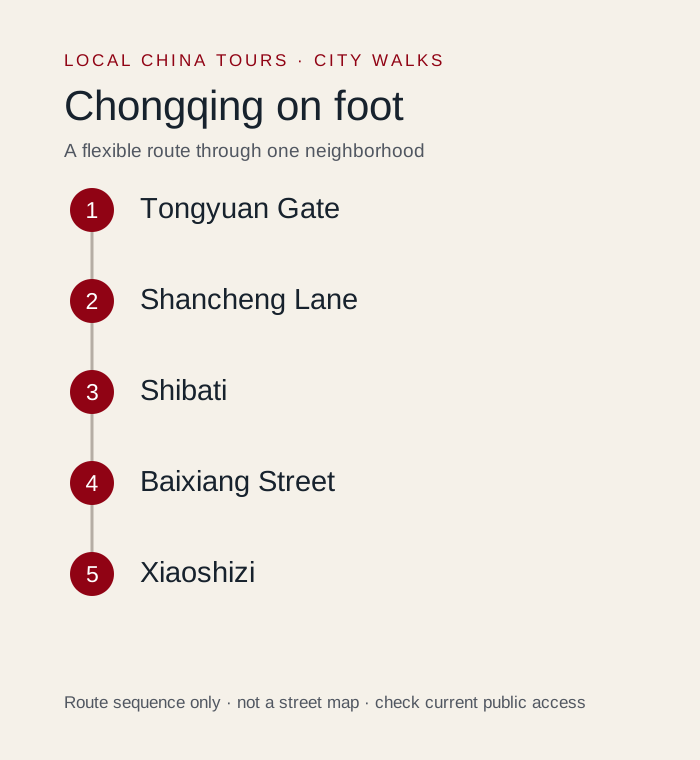
Chongqing City Walk through Old Lanes to River Views
Plan a Chongqing city walk through Shancheng Lane, Shibati and Baixiang Street, with terrain warnings, rest stops and clear transfer choices.
Plan this stop
Chongqing can anchor a stronger China route.
If you already know this destination belongs in your trip, we can shape the right sequence around it.
Plan around Chongqing