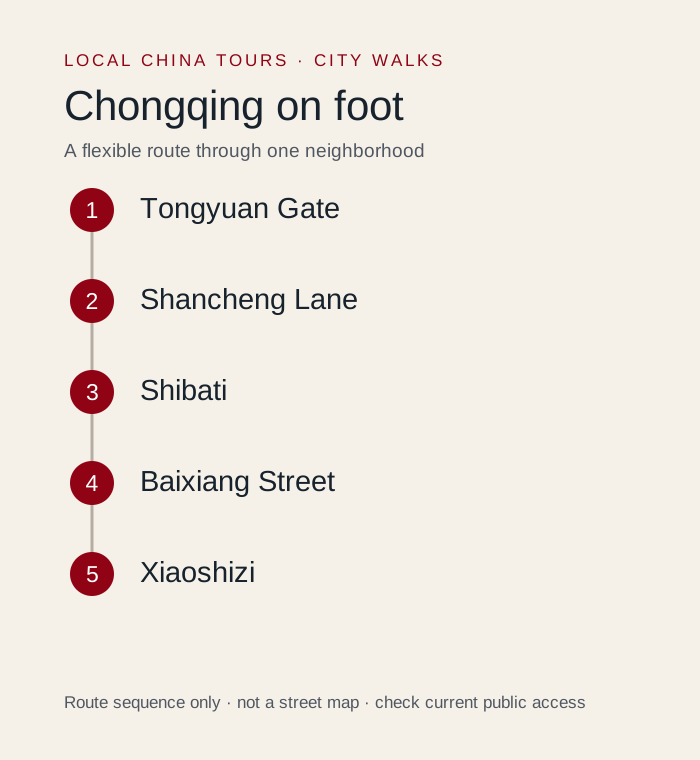
This Chongqing city walk follows Tongyuan Gate → Shancheng Lane → Shibati → Baixiang Street → Xiaoshizi. It is a neighborhood outing with time to notice streets, stop for food and change the plan, rather than a full-city sightseeing checklist. Allow 4–5 hours with rests; shorten if steps become tiring. Repeated stairs, slopes and level changes. A generally descending section does not make the full route step-free.
Several social routes advertise painless descents. This article keeps their useful high-to-low idea but makes the stairs and between-precinct connections explicit.
We would keep one proper seated break and decide on optional interiors only after checking energy and current entry conditions. The route was developed from an October 12, 2026 review of local walking material and the reference sources below; it is an editorial plan, not a claim that we personally walked every segment.
Where does the walk start and finish?
| Decision | Plan |
|---|---|
| Start | Qixinggang station / 七星岗站; choose a current exit toward Tongyuan Gate |
| Finish | Xiaoshizi station / 小什字站, with an uphill final connection |
| Time allowance | 4–5 hours with rests; shorten if steps become tiring |
| Walking load | Repeated stairs, slopes and level changes. A generally descending section does not make the full route step-free. |
| Main route | Tongyuan Gate → Shancheng Lane → Shibati → Baixiang Street → Xiaoshizi |
Save the Chinese names before setting out. Use a current pedestrian map for each connection: a route diagram shows the stop order, not every crossing, accessible entrance or temporary diversion. Exact distance varies with the entrances, lane choices and optional visits you select.
How should you follow the route?
1. Orient at Tongyuan Gate / 通远门
Begin with an identifiable upper-city landmark near Qixinggang rather than navigating to a lower riverfront pin. Chongqing maps can show a short horizontal distance while hiding a large level change. Locate the public entrance to Shancheng Lane and check the route down before committing. We would omit a detour here if the group already feels tired from arrival or has luggage to manage.
Next connection: Proceed to the signed upper Shancheng Lane / 山城巷 entrance. Use local signs and current access rather than a social post’s exact station exit.
2. Descend through Shancheng Lane / 山城步道
The lane’s value is the relationship between slopes, older buildings and river views. Move down at a measured pace, stop where the walkway widens and keep stair landings clear. There can still be small uphill sections and steps within a descending route. Cliffside boards or viewpoints may close in poor weather; accept a detour rather than stepping past a barrier for a photograph.
Next connection: At the lower exit, check the next legal pedestrian connection toward Shibati. A short car transfer is a sensible option, not a failure to complete the walk.
3. Treat Shibati as a second terrain choice / 十八梯
Shibati is another developed historical street district, not simply the next flat block. Choose a limited section instead of traversing every stair lane. Compare the older street pattern with present-day commercial use; allow time for a seated stop before deciding to continue. Promotional descriptions such as “all downhill” should never be interpreted as an accessibility guarantee for the combined outing.
Next connection: Use the public street connection toward Baixiang Street / 白象街. Check whether the chosen route climbs and shorten or transfer if needed.
4. Finish around Baixiang Street / 白象街
Keep this stop on public streets, where old-city frontage and river orientation add a different layer to the walk. Do not enter Baixiangju residential floors to reproduce viral angles. The route does not promise a cable-car photograph at a particular time or access to a private building. If you plan to return by metro, remember that reaching Xiaoshizi may require another climb after the river-side section.
Next connection: Follow current directions to Xiaoshizi or end with a street pickup. Save the opposite bank for a separately planned outing.
What is the shorter version?
Visit Shancheng Lane from its upper entrance and finish near its lower exit using a legal pickup. Choose Shibati alone if you want a shorter developed street precinct.
Choose this version at the start if you have luggage, a tight departure time or limited walking tolerance. A shorter route with a meal and a good street section is still a complete outing. If mobility access matters, confirm individual paths and entrances; this guide does not certify a step-free route.
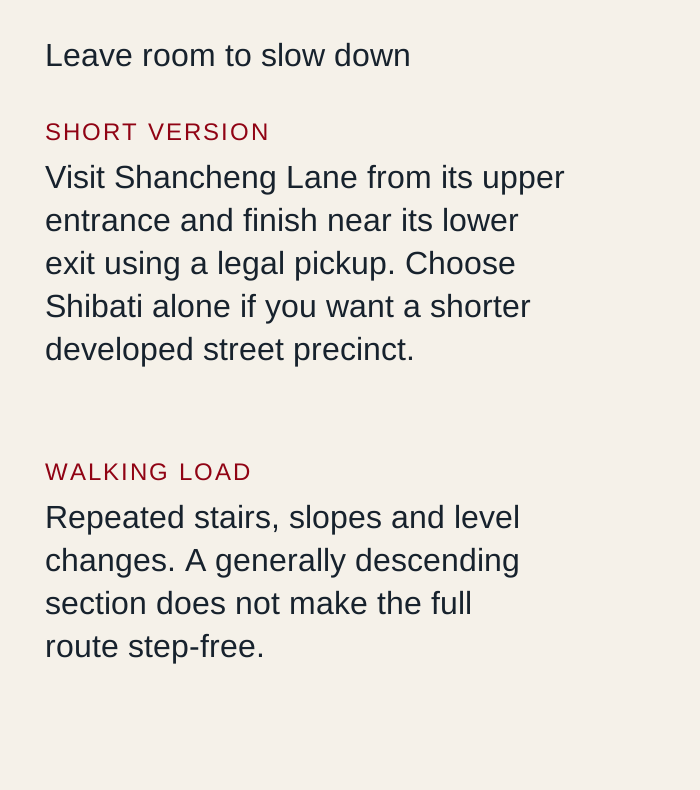 Original Local China Tours planning diagram. Route sequence and allowances are editorial guidance; use a current map for street navigation.
Where should you stop for food and a rest?
Sit down after Shancheng Lane before adding another stair district. A bowl of noodles or cooked lunch near an accessible street is more useful than a restaurant pin requiring another climb. Ask about chili and Sichuan pepper separately if either is a concern.
Plan the break before the longest or most exposed section. Take drinking water, comfortable shoes and the weather protection you need. Before ordering, confirm the current menu and any minimum spend; the basic walk does not require buying a tour, booking a terrace or entering a particular cafe.
What should you leave for another outing?
The Yangtze cableway, Longmenhao and Nanbin Road add a river crossing and a separate district. Baixiangju is residential; this route does not require entering its apartment corridors.
Optional ticketed interiors, boats and performances need their own current rules and time allowances. Public street access does not establish access to the building beside it. If heavy rain, heat, local works or crowd controls interrupt a segment, use the open public alternative, shorten the walk or take a legal transfer.
How can you walk respectfully?
Stay on public streets and signed paths. Keep doors, market aisles, stairs and narrow bridges clear, ask before photographing people closely, and do not enter residential courtyards or rooftops for a view. A popular photograph is not evidence that a space is open to visitors. Keep the final pickup on a road a vehicle can legally reach.
Where does this fit in a longer trip?
- Chongqing Mountain City Walking Guide: Xiahaoli Downhill Route adds a separate planning option; choose it according to your remaining time.
- Chongqing Food Guide for First Time Visitors in 2026 adds a separate planning option; choose it according to your remaining time.
- Chongqing Night Views: Best Skyline and River Routes adds a separate planning option; choose it according to your remaining time.
Use the Chongqing destination guide to place this walk in your wider stay. For help adjusting the route to your interests or mobility needs, use plan your trip and describe your preferred pace.
Sources and route review
Local walking material reviewed on October 12, 2026 informed the route choices and practical questions. Social descriptions can include advertising, outdated details and overambitious itineraries; they do not establish current prices, opening hours, access or accessibility. The stop order and suggested allowances are our editorial decisions.
- Chongqing official media: Shibati and Baixiang Street supplies geographic, cultural or access context. Historical notices are not a guarantee of current operation.
Check current venue notices and on-site signs for optional interiors, crowd management and weather closures. The base walk stays on currently open public streets and paths.

